
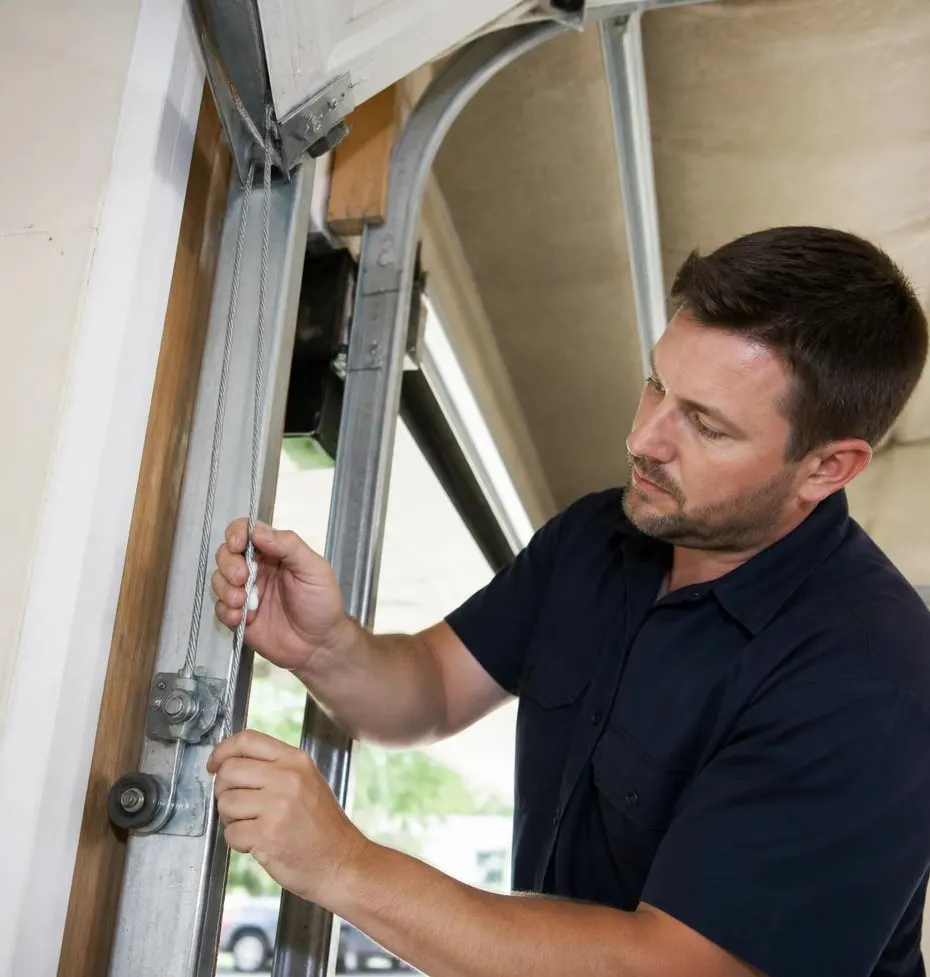
The Sound That Stops You Mid-Coffee
You hit the opener button on your way out the door, coffee in hand, and instead of the usual quiet rumble, the garage door makes a sound that makes you pause. Maybe it's a grinding noise that sounds like metal chewing on metal. Maybe it's a high squeal that wasn't there last week. Maybe something popped loud enough that you checked to see if a shelf fell. Or maybe it's just rattling the whole way up, like something's loose and about to let go.
None of these sounds are normal wear you should just live with — but they don't all mean the same thing, and they don't all mean the same urgency. Here's how to read them, in roughly the order a technician would check things once they're standing in your garage.
Grinding: Something Is Fighting the Track
Grinding is a low, mechanical, metal-on-metal sound that usually gets worse as the door travels, not better. It's one of the noises most likely to mean the door is actually struggling, not just talking.
- Worn-out rollers. This is the first thing a technician checks. Steel rollers wear down over years of use, and once the bearing inside fails, the roller grinds against the track instead of rolling smoothly through it.
- Misaligned track. Cold snaps and freeze-thaw cycles can shift a bracket just enough that the track is no longer square to the door. The rollers are fine, but they're being forced through a path that's slightly off.
- Stripped opener gear. If the grinding is coming from the opener unit itself rather than the door, the internal gear that drives the chain or belt may be worn down — often from age, sometimes from the opener straining against a door that's harder to lift than it should be.
The fix ranges from simple to involved: worn rollers get swapped out (nylon rollers run quieter than steel and are a common upgrade), a misaligned track gets re-set and re-bolted, and a stripped gear kit usually means opener repair or, if the unit is old, replacement.
Squealing: Almost Always a Lubrication Problem
Squealing is a sharp, high-pitched sound, often loudest on the first open of the day. That timing is a clue by itself. Dry mountain air at altitude pulls moisture out of everything, including factory lubricant, and overnight cold makes grease stiffen up further. The door moves, metal parts resist each other, and you get a squeal that eases up (but doesn't disappear) as things warm and loosen.
- Dry hinges. The hinges connecting door panels are the most common squeal source. A technician checks these first because they're easy to inspect and easy to fix.
- Dry rollers and bearings. Same idea, different part. If the hinges are fine but the squeal tracks with the rollers moving through the track, that's the culprit.
- Worn hinges. If lubrication doesn't quiet things down, the hinge itself may be worn enough that metal is rubbing on metal regardless of grease. That means replacement, not just maintenance.
The fix for most squealing is a proper garage-door-rated lubricant (never WD-40, which attracts grit and burns off fast) applied to hinges, rollers, and the torsion spring. It's a five-minute job that solves the majority of squeals — which is why it's usually the first thing checked and the first thing tried.
Popping: Pay Attention to This One
Popping is a single, sharp bang — not a continuous sound, but a one-time event, sometimes loud enough to be startling. This is the noise most worth taking seriously, because of where it most often comes from.
- Torsion spring stress. This is checked first because it's both the most common cause and the most important to catch early. Springs lose tension gradually, and the day-night temperature swings common here put extra stress on metal that's already fatigued. A pop can mean a spring is close to failing — or has already partially let go.
- Track separation. A bracket working loose can cause a popping sound as the door shifts against it during travel.
- Panel flex. Less serious, but real: sharp temperature changes can cause a door panel to flex and pop, especially on older steel doors without much insulation.
Torsion springs are under enormous tension and are not a DIY repair — this is the one noise where it's worth skipping the troubleshooting-at-home step. If a pop was followed by the door feeling heavier, moving unevenly, or not opening fully, treat it as a springs issue until proven otherwise.
Rattling: Usually the Easiest Fix, But Don't Ignore It
Rattling is a looser, more scattered sound that happens throughout the door's travel rather than at one point. It's often the least urgent of the four — but left alone, it tends to turn into one of the others.
- Loose hardware. Bolts and brackets work loose over time, especially with the vibration of regular use. This is checked first because it's the easiest and most common cause.
- Worn rollers. If tightening hardware doesn't quiet things down, rollers with play in the bearing are next.
- Loose opener chain or belt. If the rattle is coming from the opener rail rather than the door itself, chain tension may need adjusting.
Most rattles are solved with a wrench and twenty minutes — tighten hardware, check roller condition, adjust the chain. The catch is that a rattle nobody addresses can shake loose the very bolts and brackets holding everything in alignment, which eventually shows up as the grinding or popping above.
When It's Time to Call Us
If you're hearing a sharp pop, if the door feels harder to lift than it used to, or if a grinding noise doesn't go away after lubrication, that's when to call Woodland Park Garage Door Specialists rather than keep troubleshooting. Our spring replacement service handles the dangerous, high-tension repairs safely, and our preventive maintenance visits catch worn rollers, loose hardware, and dry hinges before a cold November morning turns them into a bigger repair.
If your garage door is talking to you, don't wait for it to start shouting. Give us a call and we'll sort out exactly what it's trying to say — proudly serving Woodland Park, CO and the surrounding Teller County communities.