
What a technician sees on this kind of call
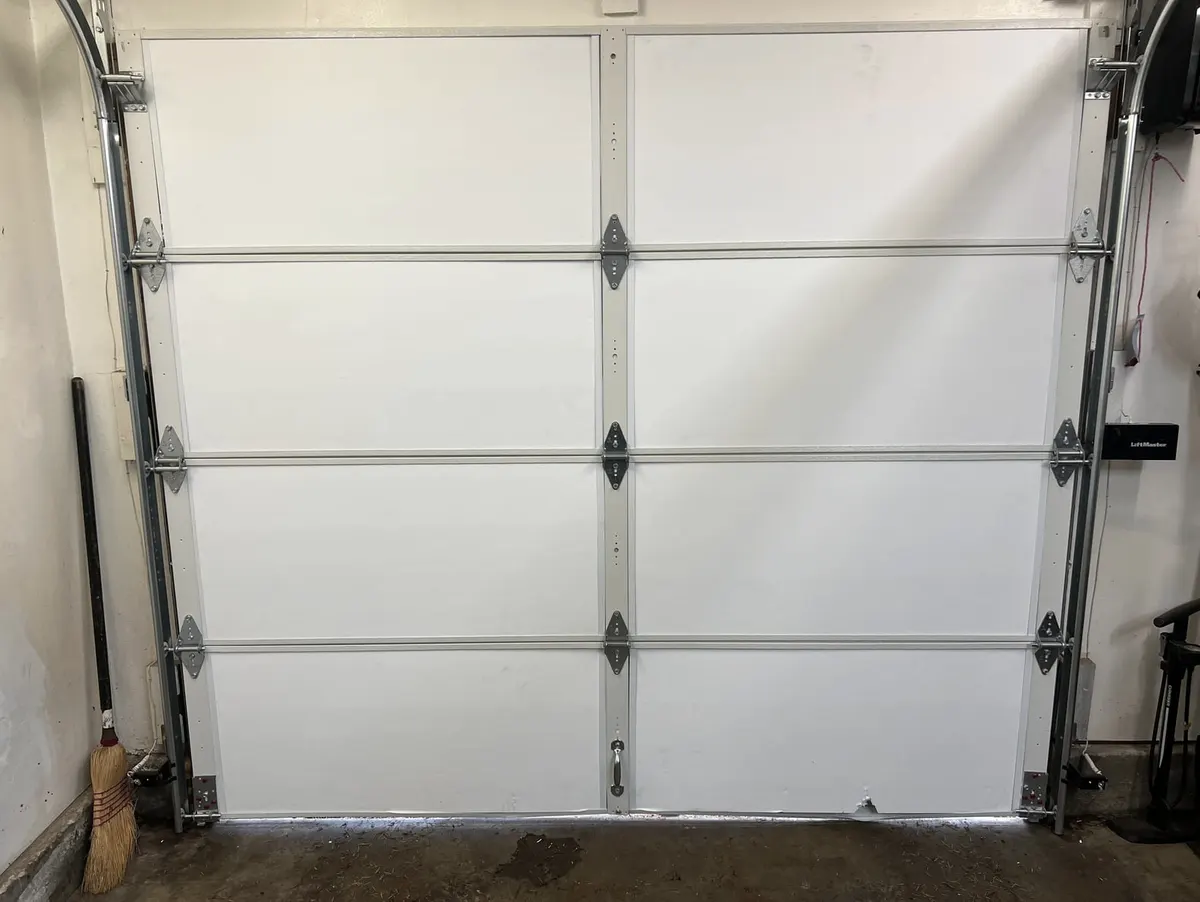
The call usually starts the same way: one spouse is convinced the furnace is struggling, the other is sure it's "just an old house." When we get out to the garage, the story is almost always visible within the first two minutes. There's a gap you can slide a finger under at the bottom corners of the door. The weatherstripping along the sides is cracked and pulled away from the frame. If it's a cold morning, there's sometimes a thin line of frost on the inside of the metal panels where warm, moist air from the house has been meeting a door that's basically the same temperature as the outside air. Walk into the laundry room or the mudroom that shares a wall with the garage, and the floor is noticeably colder than the rest of the house. That's not a coincidence — it's the garage door doing exactly what a leaky window or an uninsulated attic hatch does, just somewhere people don't think to check.
Why the garage door affects the whole house
In an attached garage, the door isn't just sealing off a storage space — it's one wall of a space that touches your living area, and often your ductwork, water heater, or furnace closet too. When that door leaks air, the garage itself swings closer to outdoor temperature. Cold air sitting against a shared interior wall, or around ducts that run through the garage ceiling, pulls heat out of the house faster than it would if the garage stayed in the 40s instead of dropping near freezing. In summer, the same thing works in reverse: a garage that bakes all day under direct high-altitude sun pushes heat into the house through that shared wall and any ductwork running through it, which makes the air conditioning (or the evaporative cooler, if that's what you're running) work harder in the evening.
This is a bigger deal here than in a lot of places, because of the swings. Woodland Park and the rest of Teller County see big day-night temperature differences — a cold, clear night can be 30-plus degrees colder than the afternoon before it. That swing happens inside a leaky garage too, just a few hours behind the outdoor temperature, which means the garage (and the wall or ductwork touching your house) is cycling through a wider range than it would with a tight door.
Where the actual leaks are
- Bottom seal: the rubber gasket along the floor. Once it's cracked, flattened, or torn, this is usually the single biggest gap — and it's the one most homeowners never check because it's low and out of sight.
- Side and top weatherstripping: the strips along the frame that the door presses against when closed. UV at altitude and repeated freeze-thaw cycles dry this material out faster than it would wear in a milder climate.
- Between-panel gaps: on older sectional doors, the joints between panels can open up slightly as hinges wear, letting air through even when the seals are fine.
- Uninsulated door panels: a single-layer steel or old wood door has almost no insulating value of its own — the seals matter, but so does what's between the surfaces.
A quick test to settle the argument
- On a cold evening, turn off the garage light and close the door. Have someone stand outside with a flashlight while you look for light coming through at the bottom, sides, and top.
- Feel along the same edges with your hand. A steady draft is easy to find once you're looking for it.
- Check the temperature of the wall or door that separates the garage from the house, compared to an interior wall elsewhere. A noticeable difference points straight at the garage.
If two or three of these show a problem, the leaky door theory just won.
What actually helps — and what's a waste of money
Replacing worn weatherstripping and the bottom seal is the cheapest fix and often solves most of the draft on its own — this is usually a low-cost repair, not a remodel. If the door itself is a thin, non-insulated panel, adding seals alone won't fix the temperature swing in the garage; at that point an insulated replacement door makes a real difference, especially with a water heater or furnace living out there. What doesn't help much: taping over gaps, foam strips pressed on without actually closing the gap they're meant to seal, or assuming a new opener will somehow fix an air leak — it won't, because the opener has nothing to do with the seal.
When to call Woodland Park Garage Door Specialists
If your flashlight test shows daylight, or the seal looks cracked and flattened when you press on it, that's a straightforward call for garage door repair — in most cases it's a seal and weatherstripping swap, not a full door replacement. If the door is older, uninsulated, and the garage holds a furnace or water heater, it's worth having us look at whether an insulated garage door installation would pay for itself over a Teller County winter. And if you just want eyes on the whole system before the cold really sets in, our preventive maintenance visit checks seals, hardware, and balance in one trip, so you're not guessing at what's actually causing the draft.
If you're in Woodland Park, Divide, Florissant, or anywhere else around the Pikes Peak region and want a straight answer on whether your garage door is the reason the house feels cold, give Woodland Park Garage Door Specialists a call — we'll tell you exactly what we find, no guesswork required.