
The Morning the Door Felt Different
It's usually a cold morning when you notice it. You hit the opener button and the door doesn't rise the way it used to — there's a hitch, a grind, a half-second pause before it moves, or it lifts crooked on one side. Maybe you had to help it along by hand once or twice last week and told yourself you'd look into it later. That hesitation is almost always the spring system talking to you before it fails outright, and springs rarely fail quietly. When a torsion or extension spring finally lets go, it does so suddenly and with real force, so the goal is to catch the warning signs while the door is still working.
Here's a checklist you can walk through yourself, from inside your own garage, before the problem becomes an emergency.
Walk the Checklist
1. Look at the Gap in a Torsion Spring
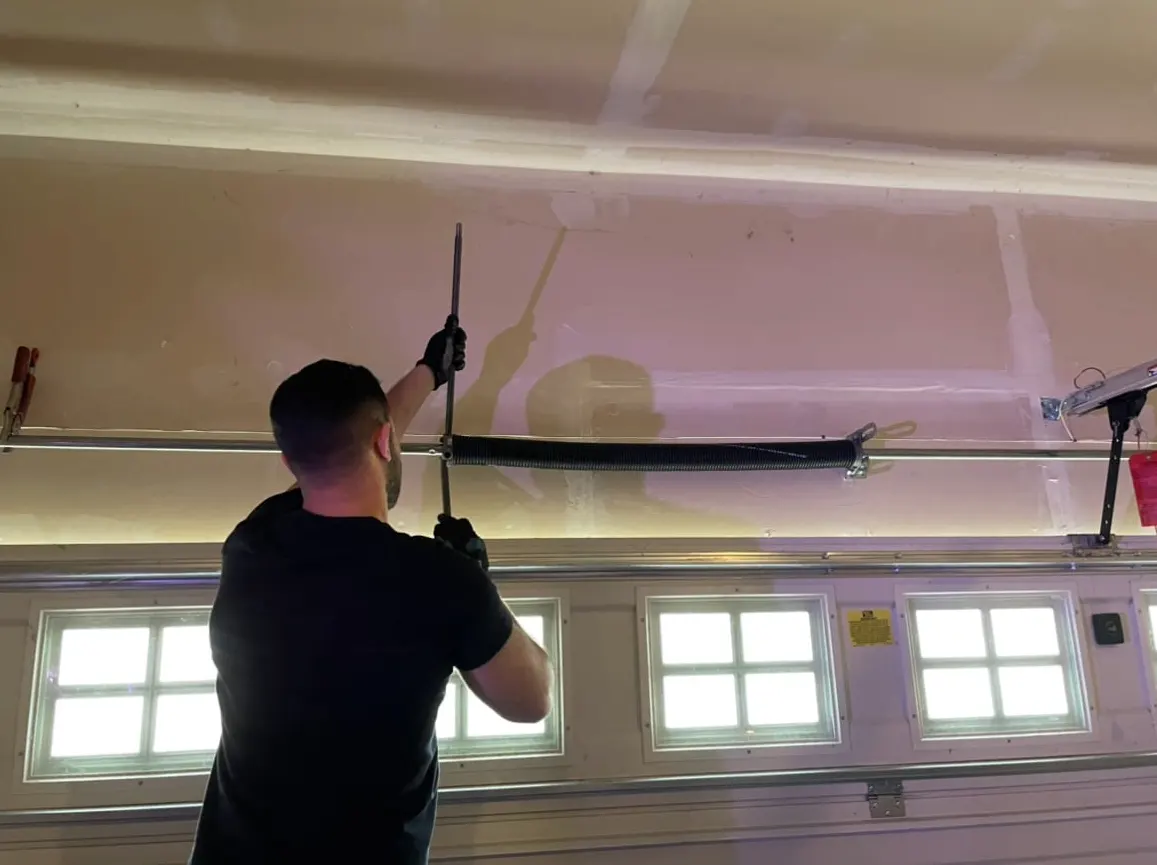
If your door has one or two torsion springs mounted horizontally above the door on a metal shaft, look closely at the coils. A healthy spring sits with its coils close together under tension. If you see a visible gap between coils, or the spring looks stretched compared to its partner, that's metal fatigue setting in. On a two-spring setup, a mismatch between the two springs is also a sign one is failing faster than the other.
2. Check Extension Springs for Stretch and Gapping
If your door instead has extension springs running along the horizontal tracks above the rollers, stretch them mentally back to new condition. Over time these springs lose tension and start to sag, or individual coils separate slightly even at rest. A spring that looks visibly longer than it did when installed, or one with uneven spacing between coils, is past its prime.
3. Inspect for Rust and Pitting
Dry mountain air helps keep moisture off metal, but temperature swings pull condensation out of the air on cold nights, and that moisture lands on cold steel. Surface rust on a spring isn't cosmetic — rust pits weaken the metal at exactly the points where it flexes thousands of times a year, and a pitted spring breaks sooner than a clean one under the same load.
4. Look at the Safety Cables and Winding Cones
On torsion springs, check the winding cones at each end for cracks, and look at the safety cable running through the center of the spring if one is present. A frayed or kinked cable here is a sign the spring is already under abnormal stress, and it's also your backstop if the spring does let go.
5. Test the Balance
With the opener disconnected (pull the manual release cord), lift the door by hand to waist height and let go. A door with springs in good shape stays roughly in place. A door that drops on its own, or shoots upward, means the springs are no longer matched to the door's weight — either from wear or from a past repair that used the wrong spring size.
6. Listen for New Sounds During Travel
A faint metallic pop, a grinding noise as the door passes the midpoint, or a rhythmic creak that wasn't there last season often traces back to a spring losing its even coil tension rather than to the opener or tracks.
7. Notice How Hard the Opener Is Working
If the opener strains, chatters, or seems to labor more than it used to on the same door, it's compensating for springs that are no longer carrying their share of the weight. This also shortens the life of the opener's motor and gears.
8. Check the Age
Torsion springs are commonly rated for a number of open-close cycles rather than a calendar date, but as a rough guide, a spring installed more than seven to ten years ago on a door used several times a day is due for a close look regardless of how it appears.
Why Teller County Winters Make This Worse
Big day-night temperature swings mean steel contracts hard overnight and expands again by afternoon, and that repeated flexing accelerates fatigue in a spring that's already weakened. Combine that with the extra load winter puts on a door — stiffer rollers, colder grease, sometimes a door that's slightly harder to lift in general — and a marginal spring tends to reach its breaking point sooner here than it would in a milder climate.
When to Call Woodland Park Garage Door Specialists
If you've gone through this checklist and seen even one or two warning signs, it's worth having it looked at before the spring fails on its own schedule. We handle Spring Replacement with the correctly matched size and cycle rating for your specific door, and we can fold a full inspection into routine Preventive Maintenance so wear gets caught early instead of during a cold snap when you least want a surprise. Springs under tension aren't a safe DIY repair — this is one job worth leaving to a technician with the right bars and clamps.
If your garage door in Woodland Park, CO is showing any of these signs, give Woodland Park Garage Door Specialists a call and we'll get it sorted before it becomes an emergency.