
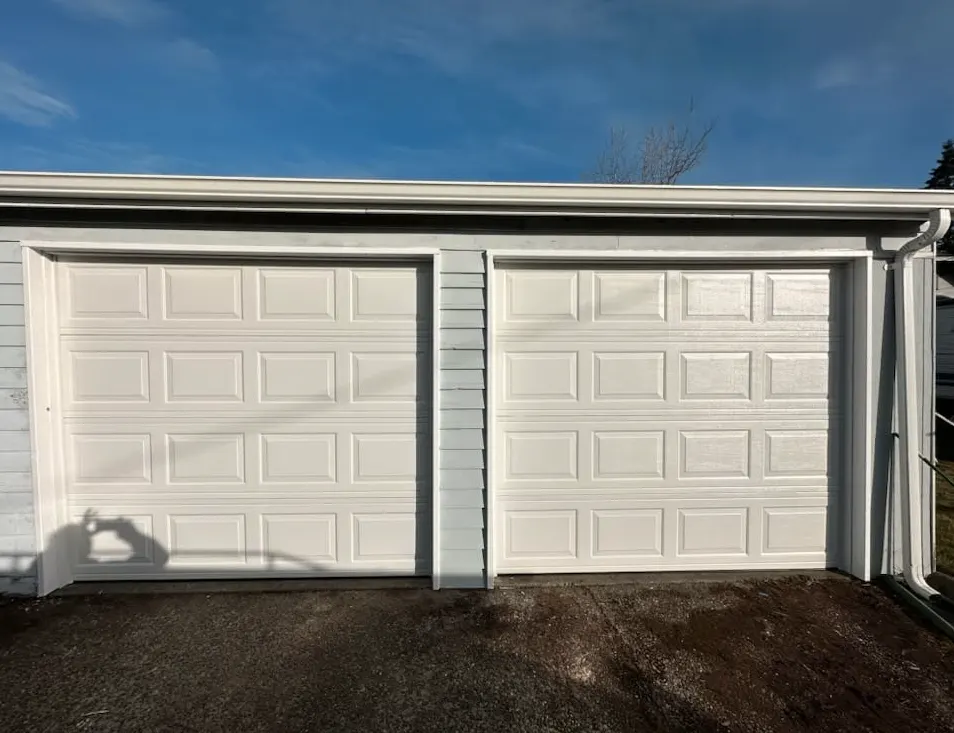
The Mistake: "It Still Works, So It's Fine"
Here's the argument that plays out in a lot of houses with an original garage door: one person wants to replace the whole thing because it's old, the other points out that it opens every morning without a hitch, so why spend the money? The second position is tempting because it's backed by daily proof — no grinding, no sagging, no drama. The problem is that "it still works" and "it's still safe" are two different questions, and a door can pass the first test for decades while quietly failing the second.
A garage door is the largest moving object in most homes, and it's held up by components under serious tension. Age by itself isn't the issue. The issue is whether a door built before certain safety features existed has ever been updated to include them. That's the actual thing to check before anyone argues about replacing the whole unit.
The Two Things Age Doesn't Excuse
1. Auto-Reverse (Safety Reversal)
Openers built before the early 1990s often predate the photo-eye sensors that are now standard — the two small boxes mounted a few inches off the floor on either side of the track that send an invisible beam across the opening. If something breaks that beam while the door is closing, the door is supposed to stop and reverse.
Test it two ways:
- Photo-eye test: Close the door and wave a broom handle through the beam area. It should reverse immediately. If there are no sensors at all, that's a retrofit, not optional maintenance.
- Contact-reverse test: Lay a 2x4 flat on the ground where the door closes. The door should hit it and reverse within a second or two. If it keeps pressing down on the board, the force settings or the mechanism itself need attention right away.
2. Spring Containment
Older torsion and extension springs were often installed without a containment cable running through the center. These springs hold an enormous amount of tension to lift a door that can weigh over 100 pounds. When one snaps without a containment cable, it can whip violently and has caused real injuries and property damage. Adding a containment cable, or replacing the spring with a modern one that includes it, is a small job with an outsized safety payoff. Given how much freeze-thaw cycling springs go through in a Teller County winter — contracting hard on cold nights, then working again once the sun hits the garage — an old, uncontained spring is exactly the kind of thing that fails without warning.
Worth Retrofitting While You're At It
- Rolling code technology: Older remotes send the same fixed signal every time, which can be captured and replayed by a cheap code-grabbing device. A modern opener or even a receiver swap gives you a rolling code that changes with every use.
- Battery backup on the opener: Not a safety issue in the same way, but useful here — winter storms that knock out power are exactly when you don't want to be fumbling with a manual release in the cold.
- Weatherstripping and bottom seal: Not a structural safety item, but worth a look if it's original. Thirty-year-old rubber hardens and cracks, especially with the dry air and strong day-night temperature swings up here, and a cracked seal lets in more cold air and moisture than people expect.
What's Fine to Leave Alone
This is usually where the other side of the argument wins some ground back:
- Solid steel or wood panels with no rust or warping. If they're straight and sealed, age isn't degrading them meaningfully. Replace them for dents, rust-through, or delamination — not for a decade count.
- Original hinges and rollers, if they're not worn. Galvanized steel hardware can run for a very long time with regular lubrication. Listen for grinding or watch for a door that travels unevenly; those are wear signs, not age signs.
- The track, if it's straight and properly aligned. Bent track is a repair issue regardless of the door's age. A straight track from 1994 does the same job as one from this year.
- A working wall console, even a basic one without smart features. Convenience upgrades are a preference, not a safety requirement.
How to Settle the Argument
Run the auto-reverse and photo-eye tests. Look for a containment cable on the springs. If both are missing, that's the retrofit list — not a full replacement, just targeted upgrades. If both are already present and the door passes a basic inspection for rust, alignment, and wear, there's a real case for leaving the rest of the door alone and putting the budget toward maintenance instead.
When to Call Woodland Park Garage Door Specialists
If you're not sure whether your door has containment cables, working sensors, or how old the springs actually are, that's a quick call rather than a guessing game. Our Garage Door Opener Service covers retrofitting photo-eye sensors and rolling code receivers onto older systems, and our Spring Replacement service includes modern springs with built-in containment cables sized correctly for your door's weight. We'll also tell you honestly which parts of an older door still have years left in them, so you're not paying for a full replacement you don't need.
If your garage door predates the current century and you want a clear answer instead of a kitchen-table debate, give Woodland Park Garage Door Specialists a call. We serve Woodland Park, Divide, Florissant, Green Mountain Falls, Manitou Springs, Cascade, Cripple Creek, and Victor, and we're glad to come take a look.